Anchoring, not just ballast
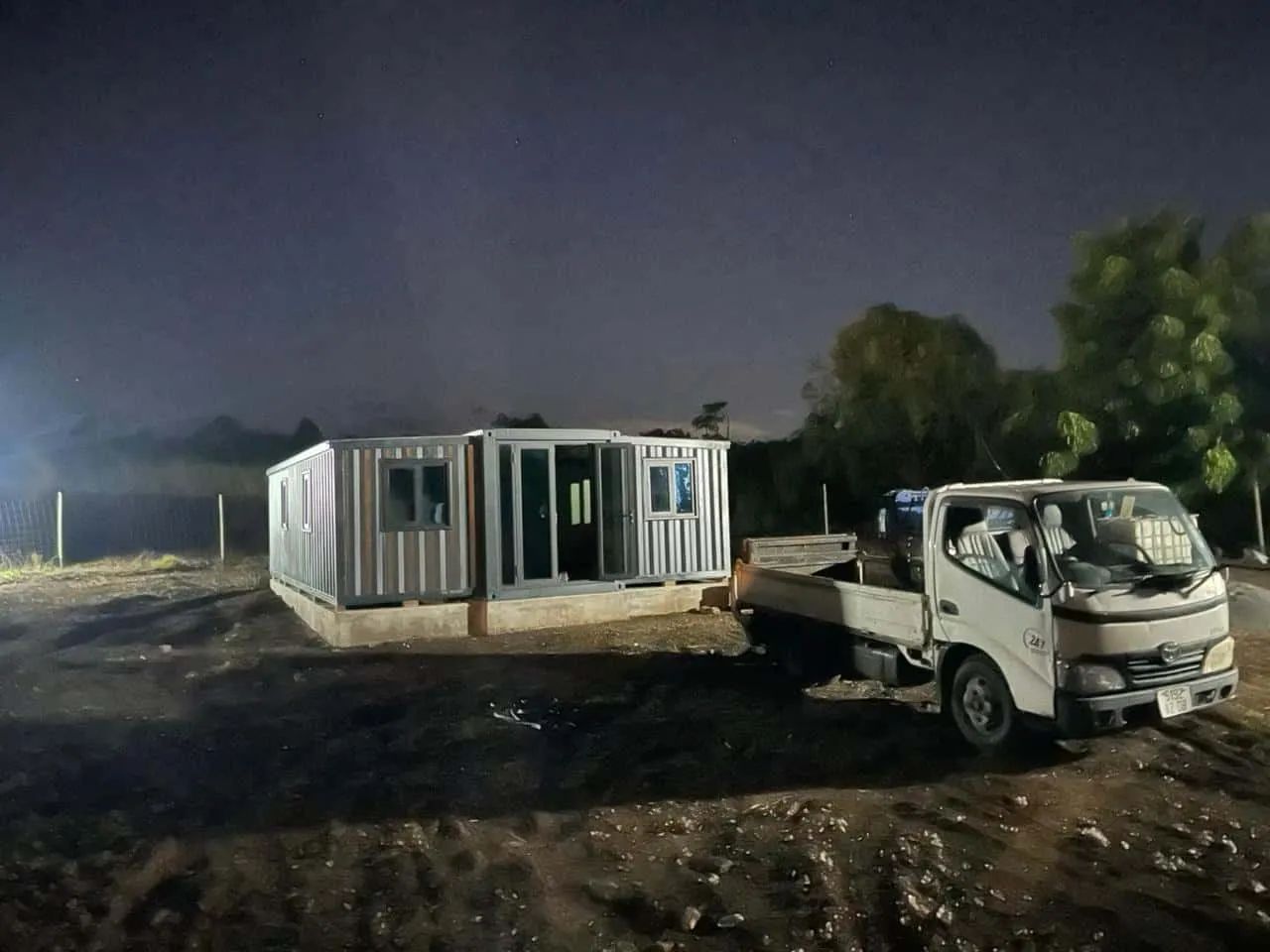
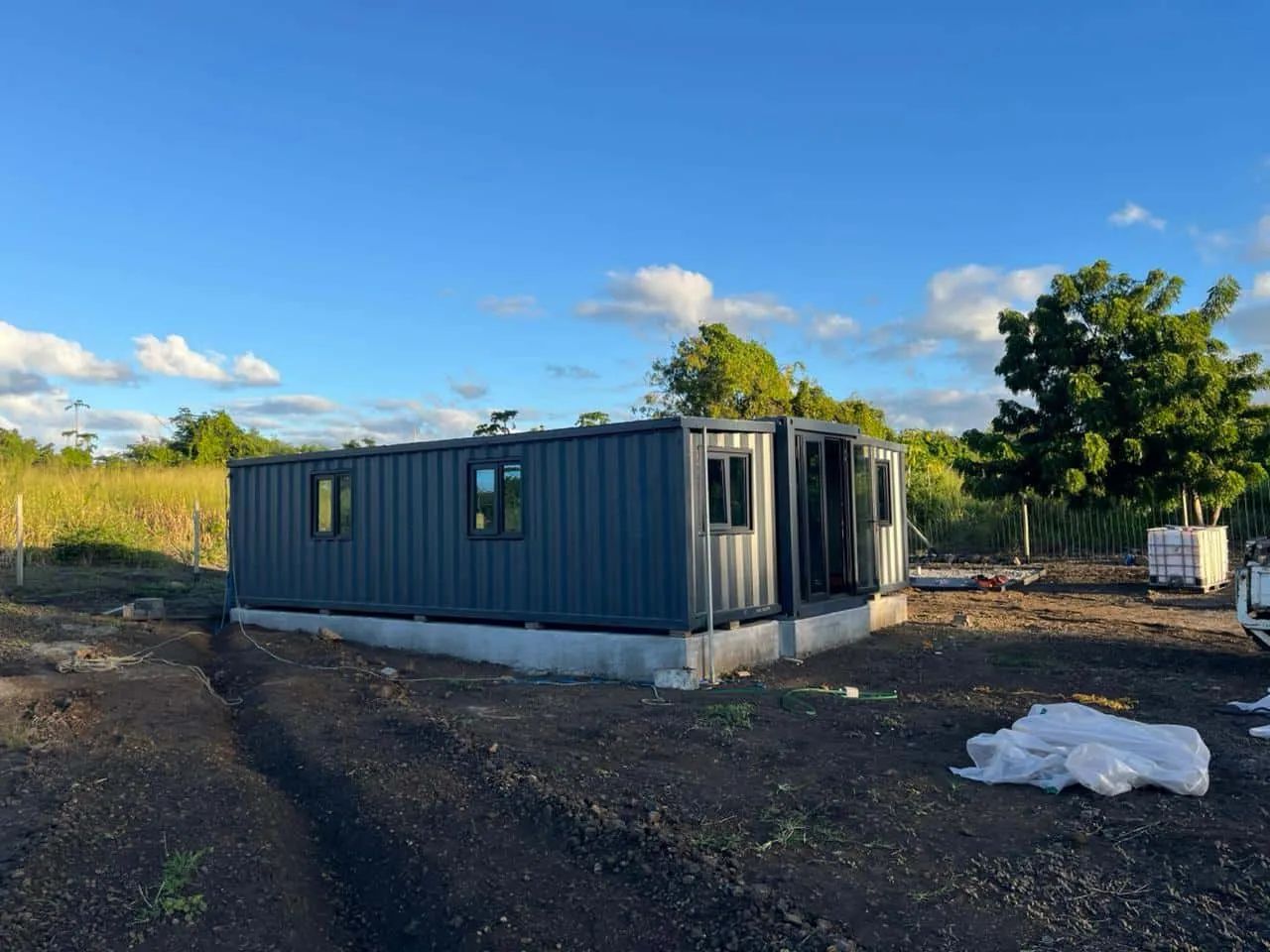
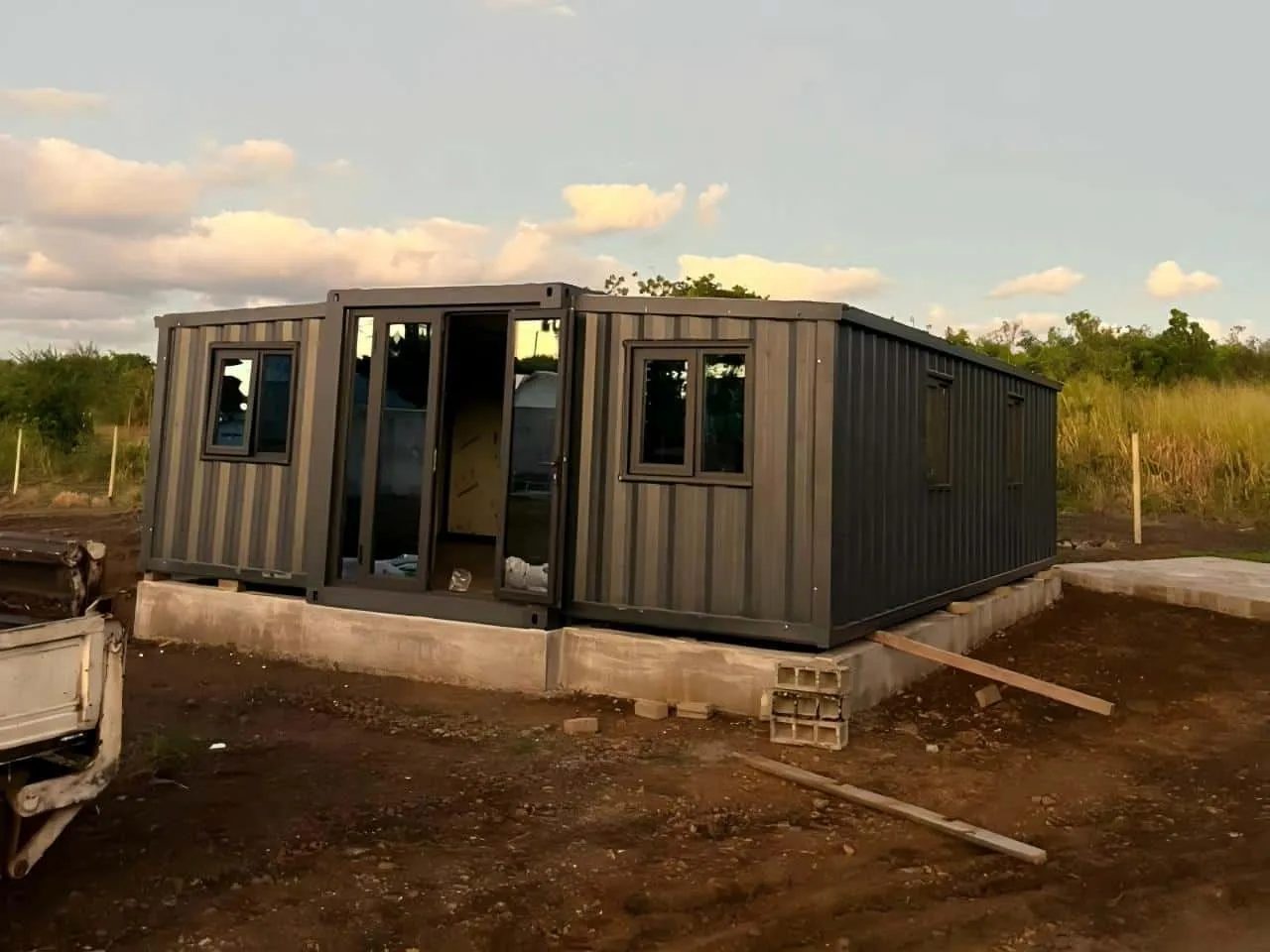
The unit is held by cast-in anchor bolts at every corner and at the two mid-span points, tied into a reinforced strip foundation rather than sitting on blocks. Expansion joints between the main box and the wings were given a continuous mechanical fixing, because the wings are where uplift starts on a wing-expandable unit.
Salt is a slow problem
Coastal salt does not take a building down in a storm, it takes the fasteners and the frames down over five years. Every exposed fixing on this unit is hot-dip galvanised or stainless, and the window frames are powder coated rather than anodised, because a scratch in an anodised coating lets salt in and a powder coat can be touched up.
Rain that arrives sideways
In a cyclone the rain does not fall, it travels. The unit uses outward-opening windows with a compression seal rather than sliding frames, and the sliding doors have raised tracks with drainage slots at each end, so water that gets past the first seal has somewhere to go other than the floor.
What we would repeat
We would ask for the wind speed at eaves height, not the regional figure. The island's published number was for open coast; this plot sits in a shallow valley that funnels wind. Getting the local number changed the anchor schedule and added one day of foundation work.